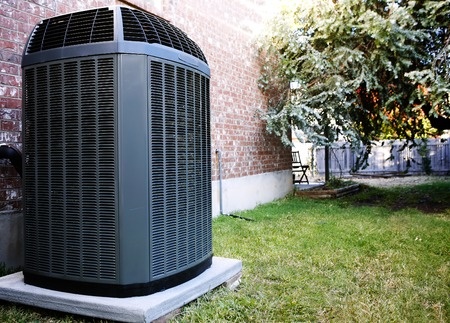
When it’s time to replace an air conditioner or heating system, homeowners are often presented with several options. One system may cost a few thousand dollars more than another because it has a higher efficiency rating.
The pitch can sound simple:
Spend more now, save more on energy later.
And sometimes, that makes perfect sense.
But does a higher-SEER HVAC system really pay for itself?
Not always.
At Fritts Heating & Air, we believe homeowners and business owners deserve honest information before making a major HVAC investment. Higher-efficiency equipment can be an excellent choice, but it is not automatically the best financial decision for every home or business.
Whether you are in Cherokee County, Alpharetta, Woodstock, Canton, Holly Springs, or the surrounding North Atlanta area, understanding the numbers can help you make a better decision.
What Does SEER Mean?
SEER stands for Seasonal Energy Efficiency Ratio. It is a measure used to rate the cooling efficiency of an air conditioning system.
In simple terms, a higher SEER rating generally means the system can provide the same amount of cooling while using less electricity under the conditions used for the rating.
For example, a higher-efficiency system may use less energy than a lower-efficiency system while providing the same amount of cooling.
That sounds like an easy decision.
But there is another number homeowners need to consider:
The price difference between the systems.
The Higher-SEER System Isn’t Always the Cheapest System to Own
Imagine you receive two quotes for a new HVAC system.
- System A costs $8,000
- System B costs $11,000
System B has a higher efficiency rating and is expected to use less electricity.
That does not automatically mean System B is the better financial choice.
You need to ask:
How much will I actually save each year?
If the higher-efficiency system saves you $200 per year in energy costs but costs $3,000 more upfront, you’re looking at roughly a 15-year simple payback before considering financing, maintenance, repairs, utility-rate changes, or the time value of money.
In another home, the numbers could be completely different.
That’s why we don’t believe in telling every homeowner that the most efficient system is automatically the best investment.
How Long Does It Take for a Higher-SEER System to Pay for Itself?
There isn’t one answer.
The payback period depends on several factors, including:
- Your current HVAC system’s efficiency
- The efficiency of the new system
- Your home’s size and construction
- How often you run your air conditioner
- Your thermostat settings
- Local electricity rates
- Your home’s insulation and ductwork
- The difference in upfront equipment costs
- How long you expect to live in the home
- Your local climate
Depending on the situation, the additional cost of a higher-efficiency system could take 10 years or longer to recover through energy savings. In some situations, the payback period may be closer to 15 years.
That doesn’t mean a higher-SEER system is a bad investment.
It means you should understand why you’re buying it.
Energy Savings Aren’t the Only Benefit
This is where the conversation gets more interesting.
A higher-efficiency HVAC system may offer benefits that have nothing to do with the electric bill.
Depending on the equipment and installation, homeowners may experience:
Better Comfort
Higher-end systems can provide more consistent temperatures throughout the home.
Instead of the system running at full capacity, shutting off, and starting again, some variable-speed and communicating systems can adjust their output based on the home’s needs.
Better Humidity Control
This can be especially important here in Georgia.
Our summers aren’t just hot. They’re humid.
Certain HVAC systems are better equipped to manage indoor humidity, which can make your home feel more comfortable even when the thermostat is set to the same temperature.
Quieter Operation
Some higher-end systems operate more quietly than traditional single-stage equipment.
For bedrooms, home offices, and other areas where noise matters, that can be a meaningful benefit.
More Consistent Temperatures
Higher-end equipment can also help reduce temperature swings and improve comfort throughout the home.
For some homeowners, these benefits are worth paying more for.
The important thing is understanding what you’re actually paying for.
The Most Expensive HVAC System Isn’t Always the Best One
This is something we believe strongly.
As HVAC professionals, our job isn’t simply to sell the most expensive equipment available.
Our job is to educate, explain the options, and help you choose the system that makes sense for your situation.
Sometimes that means recommending a higher-efficiency system.
Sometimes it means a more affordable system that meets your needs.
There is no reason every homeowner should receive the same recommendation.
Your home isn’t the same as your neighbor’s.
Your energy usage isn’t the same.
Your budget isn’t the same.
And your plans for the property aren’t necessarily the same.
Don’t Forget About the Installation
There’s another part of the equation that can be overlooked when comparing HVAC systems:
The quality of the installation matters.
A highly efficient system that isn’t properly installed may not deliver the performance you expect.
Proper sizing, airflow, ductwork, refrigerant charge, electrical connections, drainage, and system setup all matter.
That’s why comparing HVAC companies based solely on the equipment’s SEER rating or the price on the proposal isn’t enough.
Ask what is included with the installation.
Ask about warranties.
Ask whether the system is properly sized for your home.
And ask questions when something on the proposal doesn’t make sense.
Get More Than One HVAC Quote
If you’re replacing an HVAC system, we strongly recommend getting more than one quote before making a decision.
That doesn’t necessarily mean choosing the cheapest proposal.
Instead, compare what you’re actually being offered.
Look at:
Equipment: What system are you getting?
Efficiency: What is the actual efficiency rating?
Installation: What work is included?
Warranty: What is covered, and for how long?
Comfort: What improvements should you realistically expect?
Operating costs: How much could you potentially save?
Upfront cost: How much more are you paying for those improvements?
And most importantly:
Does the investment make sense for your home?
A trustworthy HVAC contractor should be comfortable answering those questions.
Residential and Commercial HVAC Services in North Georgia
Fritts Heating & Air works with both residential and commercial customers throughout North Georgia.
Whether you’re replacing the air conditioner at your home, maintaining a heating and cooling system at your business, or trying to determine whether a higher-efficiency system makes financial sense, our goal is to give you the information you need to make a confident decision.
We proudly serve customers throughout Cherokee County and the surrounding North Atlanta area, including Woodstock, Canton, Holly Springs, and the growing Alpharetta area.
We’re also expanding our presence in the Alpharetta market and look forward to helping more homeowners and businesses in the area with dependable HVAC service, repairs, maintenance, and replacement.
You Don’t Need the Most Expensive HVAC System. You Need the Right One.
A higher-SEER HVAC system can absolutely be worth the investment.
For some customers, the energy savings make sense.
For others, the improved comfort, humidity control, quieter operation, or long-term plans for the home make the additional investment worthwhile.
And for some homeowners, the additional cost simply doesn’t make financial sense.
That’s okay.
The right HVAC system isn’t necessarily the one with the highest efficiency rating or the highest price tag.
It’s the system that makes sense for your home, your budget, and your needs.
At Fritts Heating & Air, we believe you deserve to understand those differences before you sign a contract.
Thinking about replacing your HVAC system? Get a second opinion and compare your options. Contact Fritts Heating & Air to schedule service or request an estimate for your residential or commercial HVAC needs.